

Your Crews Don't Need Another App
The information you need already leaves the field every day. It leaves as texts, calls, and photos.
From Handy Ventures
Somewhere in your company's past there's an app graveyard. The field platform everyone was trained on at a Tuesday meeting, used for three weeks, and quietly abandoned. The time-tracking tool that two people adopted. The daily log software that produced eleven daily logs, ever. You paid for the licenses for another year anyway, out of optimism.
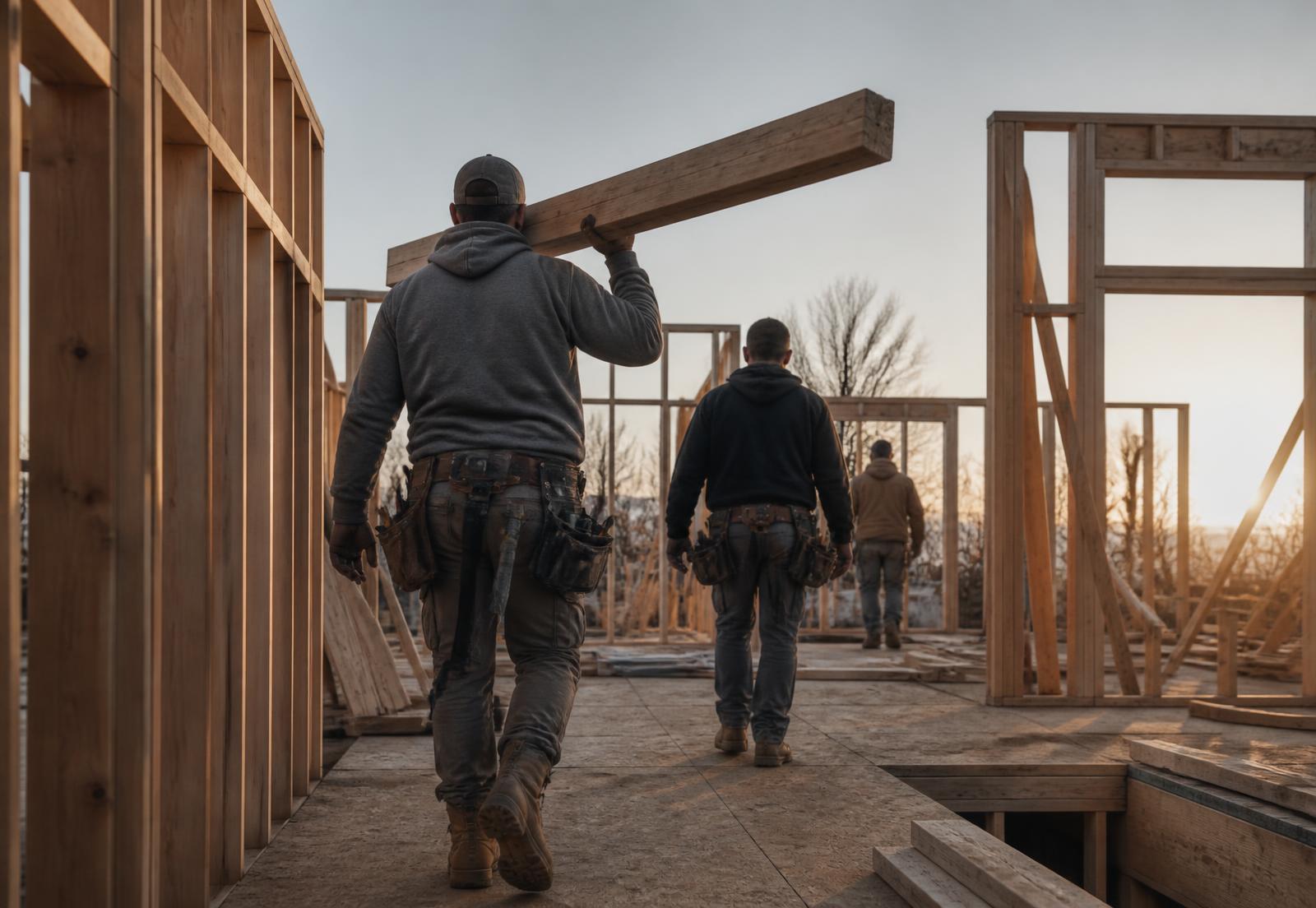
The industry's explanation for this is that construction crews resist technology. That explanation is wrong, and you can prove it with one observation: your crews use their phones constantly. They text you photos of the finished rough-in. They call about the concrete truck stuck on the highway. They send their hours on Sunday night, group-text about Monday's start time, and video-call from the crawlspace to show you the surprise they found there. The field communicates all day long, fluently, through technology.
What the field resists is not technology. It's data entry.
The second job
Look at what the abandoned apps all asked for. Download this. Create a login. Select the project from a dropdown. Choose the task. Update the status. Attach the photo. Categorize the photo. Complete the form. Submit.
Every one of those steps is office work, and the app's real proposal was to push office work onto the people holding the tools. A foreman running a crew of six, sequencing three trades, watching the weather, and answering the customer who wandered out with coffee is being asked to also be a data-entry clerk, standing in the mud, on a four-and-a-half-inch screen, with gloves on.
They won't. Not because they're stubborn, but because they're busy doing the thing that makes everyone money. The form loses to the nail gun every time, and it should.
So the software fills up with silence, the office complains that the field won't use the system, the field concludes the office lives on another planet, and the information everyone needed goes back to traveling the old way: in texts nobody keeps and phone calls nobody writes down.
The information was in the messages the whole time
Here's what's strange about that failure. Read back through those texts and calls, the old way everyone fell back on, and notice what's in them.
"Truck's stuck, concrete's pushed to Thursday." That's a schedule change.
"Homeowner wants a plug on the island, told her we'd price it." That's a change order being born.
"Here's the rough-in, ready for inspection." A photo, a milestone, and a project update in one message.
"Me and D did 9 on Patterson today." That's labor cost landing on a job, and eventually payroll.
The field already reports everything that matters, every day, in real time, unprompted. It just reports it in sentences instead of fields. The industry looked at that stream and concluded the field needed to be retrained to fill out forms. The more interesting conclusion is the opposite one: the communication that's already happening should become the record.
A text about a delay should turn into the schedule issue it describes. A call about extra work should start the change order it implies. The Sunday-night hours should land on the job they belong to. Not because someone retyped them, but because the system that received them understood what they were.
Who pays the friction tax
Every piece of information in a company pays a toll somewhere: someone or something has to capture it, structure it, and put it where it belongs. The only real question is who pays.
For a decade, construction software sent the bill to the field, and the field, sensibly, refused to pay. So the toll landed on the office instead, as retyping, and on the business, as the things that never got captured at all: the change order that stayed a phone call, the hours that arrived Friday from memory, the delay nobody logged until it collided with the next trade.
The better answer is that machines should pay the toll. Software has become good at exactly this: reading a sentence, understanding that it's about a delay or a change or hours, and filing it where it belongs. The friction that used to be a person's job can be absorbed by a system that never gets tired of it.
That principle sounds simple, but it inverts how field technology gets designed. Instead of asking how to get crews into the software, you ask how the software gets to the crews. The best field technology is technology the field barely has to think about, because it meets them inside the tools they already chose: the text thread, the phone call, the photo.
The audit
Scroll back through the last fifty texts between your field and your office. Count how many contain information that someone then retyped somewhere else, into the schedule, the accounting system, a change order, a payroll entry. Then count how many contained information that never got recorded anywhere at all.
Those fifty messages are your real field-reporting system. It already has full adoption, zero training costs, and total buy-in from the crews. It's just been running without a memory.
Your crews don't need another app. They need the messages they already send to start doing the paperwork.
If it's a question you're sitting with right now, we'd rather talk it through than have you read about it.